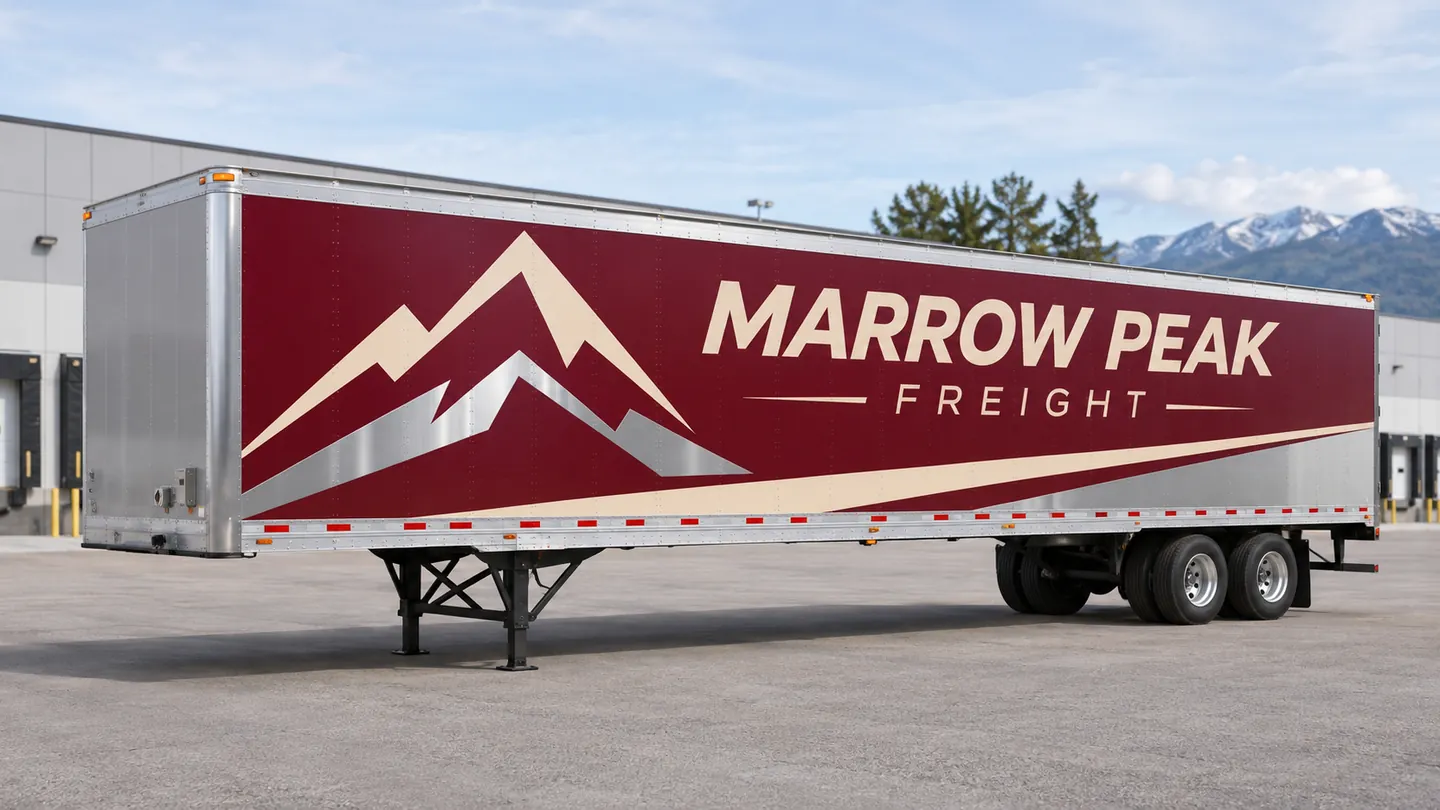
Identify the actual trailer
Record the trailer’s stable unit reference, known body information and relevant configuration. Describe the construction you can identify without guessing at an unknown substrate. Give each side and door assembly a name that can also be used in photographs, measurements and the accepted coverage plan.
Identify repairs, replaced panels and earlier graphics. A long side may contain several condition histories even when its color looks uniform. The supplier needs those differences to assess preparation and application questions rather than assuming the entire trailer behaves as one uninterrupted new surface.
- Use one stable unit reference.
- Name sides and door assemblies consistently.
- Record repairs and replaced sections.
Show construction and movement
Photograph panel joints, rivets, rails, caps, latches, tracks and hinges where they affect the proposed graphics. Start with full views, then add labeled closeups. A detail without a location can make a local condition look broader or leave the supplier unable to connect it with the scope.
Describe doors and access panels in their normal operating states. Ask the provider how the proposed design and material construction relate to those assemblies. The worksheet records a question for review; it cannot decide that a moving joint or different substrate accepts the same treatment as the side panel.
- Pair detail images with full location views.
- Identify actual door and access-panel construction.
- Keep moving-part questions visible in the survey.
Keep scope and evidence together
Mark intended surfaces and exclusions on the trailer views. Ask which dimensions, substrate details and condition checks need confirmation before artwork or production. Use the current manufacturer technical resources for the exact products proposed by the supplier rather than a generic film assumption.
Save the accepted survey with coverage, proof and installed product references. If repair or equipment changes the trailer before installation, update the evidence. A retained survey will also help a later replacement request identify the surface, construction and conditions associated with the original graphic work.
- Agree coverage boundaries on labeled views.
- Identify remaining inspection and measurement needs.
- Update the survey when the trailer changes.
Keep a working record
Before you approve the next step
- Identify the trailer and unit reference.
- Name sides and door assemblies.
- Record visible construction and repairs.
- Photograph joints, hardware and condition.
- Mark proposed coverage and exclusions.
- Keep supplier-confirmed survey references.
Use the free planning tool to organize the details you can confirm and the questions still open.
Four questions before the next step
Are the trailer sides and doors one graphics scope?
They can be part of one project, but their actual surfaces, construction and coverage need separate description. Do not infer door treatment from the side area alone.
Read the detailed guide: Survey trailer sides and doors as distinct surfaces
Does the worksheet approve the substrate?
No. It organizes known construction and condition information. The supplier should confirm suitability and the relevant exact-product instructions for the actual surfaces.
Read the detailed guide: Survey trailer sides and doors as distinct surfaces
Does sending requested dates reserve installation?
No. Ask the provider to confirm the scope, location, readiness and scheduling arrangements. Keep the actual confirmation separate from the dates you initially requested.
Read the detailed guide: Plan trailer graphics access and vehicle movement
Can this guide determine how a trailer should be positioned?
No. It identifies the question and responsible contacts. The provider and appropriate vehicle or site personnel should confirm safe, suitable arrangements for the actual work.
Read the detailed guide: Plan trailer graphics access and vehicle movement
Original technical sources
Use the linked publisher's current instructions for the exact product and vehicle. This planning guide does not replace its application, safety or warranty requirements.